![ndustrial-logo-color-1-1.png]](https://info.ndustrial.io/hs-fs/hubfs/ndustrial-logo-color-1-1.png?height=40&name=ndustrial-logo-color-1-1.png)
Review this workflow after completing the facility survey and before assigning Ndustrial equipment to refrigerated assets. It provides the end-to-end process for confirming assets in Linq, completing required information, updating QR tags when necessary, synchronizing changes, and validating the updated asset list in the Ndustrial provisioning app.
For detailed tag-placement examples, see Asset QR Tag Placement & Remapping.
Table of Contents:
1. Confirm the In-Scope Assets
Using the facility survey, create a clear list of the refrigerated assets included in the assigned job.
In-scope assets generally include:
- Walk-in coolers
- Walk-in freezers
- Reach-in coolers
- Reach-in freezers
- Other refrigerated assets specifically included in the job
Do not include checkout-aisle or impulse-buy equipment, vendor-owned equipment, pharmacy equipment, or other assets outside the assigned scope unless specifically directed.
Before continuing, confirm that you can physically locate each in-scope asset and distinguish it from adjacent or connected equipment.
2. Open the Facility in Linq
Open the correct facility in Linq using the link provided in the Ndustrial provisioning app.
Open Linq:
https://wg.linq.io/auth/login
Compare the physical assets identified during the survey with the refrigeration assets currently listed in Linq.
For each physical asset, determine whether:
- The correct asset already exists
- The asset exists but requires updated information
- The asset exists but requires a new or relocated QR tag
- The asset is missing in Linq and must be created
- Multiple records may represent the same physical asset
Avoid creating a duplicate when an existing asset record can be correctly matched and updated.
3. Create or Update Each Asset
Existing Assets
When the correct asset already exists in Linq:
- Confirm that the record represents the physical asset in front of you.
- Review the asset type, name, location, metadata, and assigned QR tag.
- Correct or complete inaccurate or missing information (see Required Asset Information below).
- Determine whether the current physical tag can remain in place or must be relocated under the project scope and remapped in Linq.
- Save the changes.
- Manually sync the asset to ServiceChannel.
Missing Assets
When an in-scope physical asset does not exist:
- Create a new refrigeration asset in Linq.
- Complete all required asset information. (see Required Asset Information below).
- Assign an approved physical QR tag.
- Save the new asset.
- Manually sync it to ServiceChannel.
Do not create a new asset simply because an existing tag is missing, damaged, or located incorrectly. When the existing Linq record represents the correct equipment, update that record and use Remap QR instead.
4. Complete the Required Asset Metadata Collection
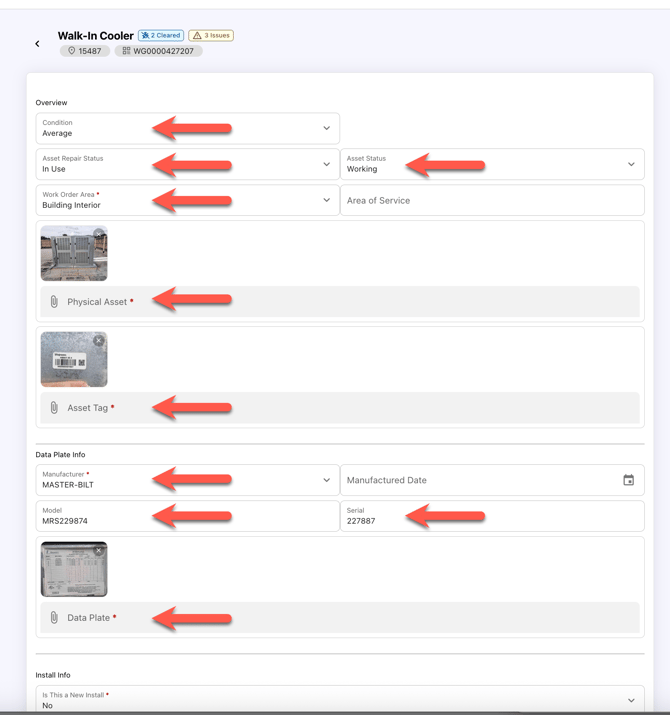
Verify and complete all required refrigeration asset fields. Some fields may not appear required in Linq but must still be completed so the asset synchronizes properly.
Required information includes:
Asset Status and Classification
Complete the following fields:
- Condition
- Asset Repair Status: Select
In Use - Asset Status: Select
Working - Work Order Area: Select
Building Interior - System: Select
refrigeration_retail - Is This a New Install: Select
No
Required Photos
Capture and attach:
- Physical Asset: A clear photo showing the complete refrigerated asset
- Asset Tag: A clear, readable photo of the physical QR or barcode tag
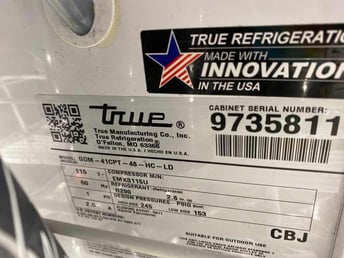
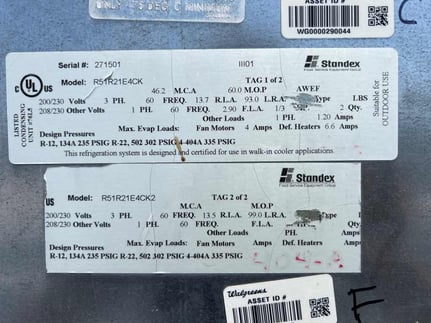
- Data Plate: A clear photo of the equipment nameplate
Data Plate Information
Enter the information shown on the equipment nameplate:
- Manufacturer
- Model
- Serial Number
Use the equipment nameplate or approved project documentation. Do not guess or enter assumed values.
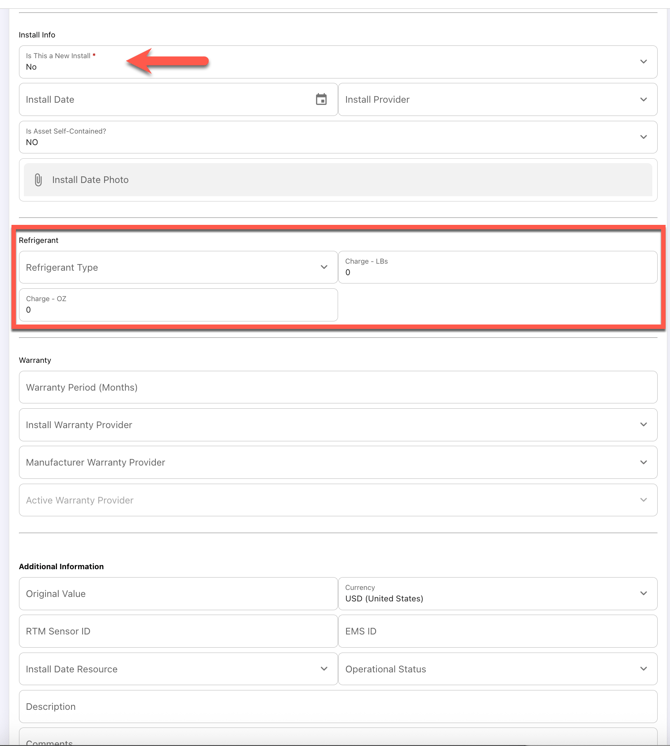
Refrigerant Information
Refrigerant field information (shown below) is not a requirement for syncing asset information to Service Channel, for this specific project scope.
RTM Sensor ID
Do not enter a Sensor ID on the refrigerated asset.
Ndustrial will automatically populate the appropriate sensor information after the hardware provisioning job is completed.
5. Find Correct Metadata per Asset Type
Reach-In Assets
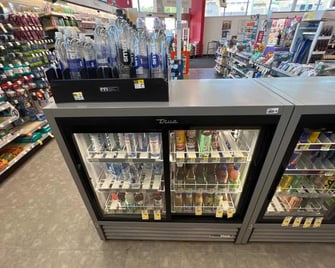
For reach-in coolers and freezers, collect the manufacturer, model, and serial-number information from the equipment nameplate on the refrigerated unit.
Confirm that the Linq record represents the complete reach-in asset rather than an individual door or section, unless physically separate units are intended to be managed as separate assets.
Walk-In Assets
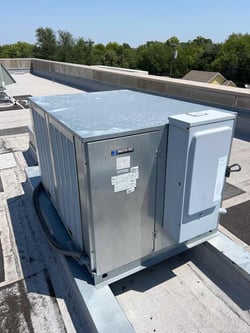
For walk-in coolers and freezers, collect the manufacturer, model, and serial number from the condensing unit that serves the walk-in. The walk-in enclosure itself may provide little useful maintenance information.
Because of a previous asset tagging strategy, the existing asset tag may also be located on the rooftop or exterior condensing unit. Retain the existing asset record and service history, then follow the remapping process in Section 6 (below) to relocate the scannable tag to the walk-in entrance.
Use the approved roof-access and safety process when collecting nameplate information or removing an existing tag. Do not enter unverified equipment information.
6. Confirm, Relocate, or Remap Physical Asset QR Tag
An existing physical tag may remain when it is:
- Present on the correct asset
- Scannable
- Associated with the correct Linq record
- Located in an approved, accessible position
- Not damaged, obscured, or routinely blocked
Use Remap QR when:
- No physical tag is present
- Linq shows a virtual tag, often identified with VT
- The asset has a temporary or custom identifier, such as
1411_8/9/2024_WALK-IN COOLER
- The asset has a temporary or custom identifier, such as
- The existing QR code is damaged or cannot be scanned
- The tag is associated with the wrong physical asset
- The tag is in an inaccessible or strategically incorrect location
- A walk-in asset’s tag is located on rooftop or exterior condensing equipment and must be relocated to the walk-in entrance
For walk-in assets, some existing tags may be located on the condensing unit because of a previous tagging strategy. Retain the existing Linq asset record, use Remap QR to assign a new physical tag, and place the new tag on the walk-in door or door frame.
Remapping changes the scannable identifier while preserving the existing asset record and ServiceChannel history.
See Asset QR Tag Placement & Remapping for detailed placement, removal, and remapping instructions.
(see 00:58 below).
7. Manually Sync Every Created or Changed Asset
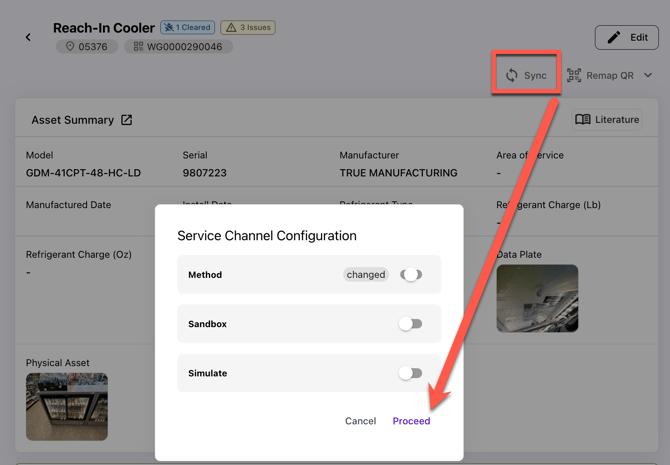
Every asset that is created, edited, or remapped must be manually synced from Linq to ServiceChannel.
Use the Linq sync action button after completing changes to each asset (top right of View Asset page).
Saving the asset does not necessarily complete the ServiceChannel update. Confirm that the manual sync has been initiated successfully before leaving the asset workflow.
At the end of the Asset Tagging process - an installer will return to the Ndustrial Provisioning App where they should see a list of updated Asset Tag records.
If Asset Tags have been updated in Linq, but are not showing in the Ndustrial Provisioning app, its likely the sync between Linq to Service Channel to Ndustrial did not complete.
8. Confirm the Updated Asset List in the Ndustrial App
After all required Linq changes have been saved and synced, return to the Ndustrial provisioning app.
Confirm that:
- Every in-scope refrigeration asset appears
- Newly created assets are included
- Corrected asset names are visible
- Remapped assets display the new QR tag identifier
- Temporary or virtual identifiers are no longer being used
Do not assign monitoring equipment to an outdated, duplicate, or incorrect asset record.
If changes do not appear after the expected synchronization period (near instantaneous), refresh the asset list or try re-syncing the asset from within the Linq app.